Hunter Douglas Silhouette® Sheer Shades Review for Bay Area Homes

A Hunter Douglas Silhouette Sheer Shades review should begin with the moment that makes these shades different: the room remains softly daylit, but the glare that makes a west-facing living room difficult at 4 p.m. is greatly reduced. Silhouette shades pair the tailored appearance of a sheer with adjustable fabric vanes, giving homeowners a more refined way to manage sunlight, privacy, and views than a conventional shade can offer.
For San Francisco and Marin homes with expansive windows, changing light, and architecture worth seeing through the glass, that balance is compelling. These are premium custom window treatments, however, and they are not the answer to every room. The best decision comes down to how you use the space, how much privacy you need after dark, and whether a clean, softly layered look suits the rest of the interior.
What Makes Hunter Douglas Silhouette Shades Different?
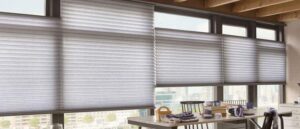
Silhouette shades are constructed with horizontal fabric vanes suspended between two sheer panels. When the vanes are open, the front and back sheers diffuse incoming daylight. When they are tilted closed, they increase privacy and soften direct sun while retaining the shade’s light, architectural presence.
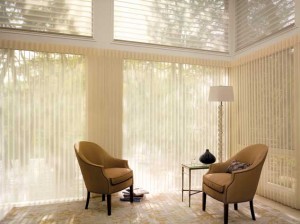
The visual effect is notably softer than a blind. Rather than creating a hard pattern of slats across a wall or floor, Silhouette shades filter sunlight into an even glow. This is a strong fit for formal living rooms, open-plan great rooms, dining rooms, and primary bedrooms where the window treatment should feel intentional but not visually heavy.
The available vane sizes also matter. A larger vane often feels more proportional on broad picture windows and can preserve a stronger sense of the view. A smaller vane can suit more compact openings or interiors with a quieter, more tailored scale. Fabric color changes the experience as well. Warm whites and soft neutrals tend to disappear into the architecture, while deeper hues can frame a window with greater definition.
Hunter Douglas Silhouette Review: Light and Privacy
Light management is where Silhouette shades earn their reputation. With the vanes open, they diffuse harsh daylight while allowing a connection to the outdoors. This can be especially valuable in Bay Area homes with strong afternoon exposure, reflective water or city light, and large glass walls that bring in more brightness than a room can comfortably use.
The vanes can then be adjusted for more control as the sun moves. In a media area or home office, that flexibility is often more useful than an all-or-nothing shade. You can reduce screen glare without turning the room into a dark box. In a dining room, you can soften late-day sun while keeping the atmosphere open.
Privacy requires a more specific conversation. The sheer fabric provides useful daytime privacy because it obscures direct views into the home while preserving outward visibility. At night, when the interior is illuminated and it is dark outside, privacy is more limited when vanes are open. Closing the vanes improves coverage, but homeowners who need complete nighttime privacy or room-darkening should consider a dual-shade configuration or a complementary drapery treatment.
Silhouette shades are not blackout shades. For a nursery, a bedroom used by a shift worker, or a dedicated media room, a room-darkening roller shade, blackout-lined drapery, or a layered solution may be a better specification. That is not a weakness so much as a question of choosing the right product for the job.
How They Perform for Views
For view-oriented homes, Silhouette shades have an advantage over heavier fabrics and many opaque treatments. Their sheer panels maintain a gentle visual connection to the landscape, whether that is a garden in Marin, a hillside, or a San Francisco skyline. Still, the view is filtered, not perfectly clear. Homeowners who prioritize the sharpest possible view may prefer a more open sheer or another Hunter Douglas option designed around view-through fabric.
Design Value and Energy Comfort
Silhouette shades bring a polished, finished quality to a room because the fabric is contained in a slim, horizontal form. They work particularly well in contemporary, transitional, and quietly traditional interiors. Unlike drapery, they do not require wall space beside the window. Unlike shutters, they do not add a strong architectural grid. Their strength is restraint.
They can also help manage solar heat and UV exposure by diffusing sunlight before it reaches furnishings, floors, and artwork. The degree of benefit depends on fabric selection, window orientation, glass type, and how the shades are positioned during the day. A south- or west-facing glass wall may still need a thoughtful plan for heat gain, particularly in rooms with extensive glazing.
For that reason, a professional consultation should look beyond color and fabric samples. The right recommendation considers the window size, frame depth, adjacent door clearance, sun path, privacy from neighboring homes, and whether the treatment needs to coordinate with existing drapery or architectural finishes.
Manual Operation or PowerView Automation?
Silhouette shades are available with manual operation options as well as Hunter Douglas PowerView automation. For difficult-to-reach windows, large banks of glass, and everyday rooms with changing sun conditions, motorization is often the most practical choice.
PowerView allows shades to move on schedules or through convenient control options, helping manage bright morning sun, afternoon glare, and evening privacy with less daily effort. In a primary residence, the convenience is obvious. In a second home, it can also help maintain privacy and protect interiors from prolonged sunlight when the property is unoccupied.
Motorization is not necessary on every window. A manually operated shade can be an excellent value for a guest room or a window adjusted only occasionally. But when several shades must move together, manual operation can become tedious and may result in shades being left in one position all day. For a clean, coordinated elevation, automation is worth serious consideration.
What to Consider Before You Buy
Silhouette shades are a premium investment, and their custom nature is part of the value. Precise measuring, fabric selection, installation, and programming all affect the finished result. They are best suited to clients who value a tailored fit and want guidance rather than an off-the-shelf window covering.
There are practical considerations, too. The sheer fabric and internal vanes need gentle care. Regular light dusting or careful vacuuming with an appropriate attachment can help maintain their appearance. In kitchens with heavy grease, or in children’s spaces where shades may receive rough treatment, a more durable and easily wiped surface may be preferable.
Cost will vary with window dimensions, fabric, operating system, and the number of shades in the project. Wider openings, specialty shapes, and PowerView automation naturally increase the investment. The key comparison is not simply the price of a shade, but the quality of light control, fit, longevity, and design integration it provides over time.
Who Should Choose Silhouette Sheer Shades?
Silhouette shades are an excellent choice for homeowners who want filtered daylight, a softened view, and a refined alternative to standard blinds. They are especially effective on prominent windows in living spaces where daylight is welcome but uncontrolled sun is not.
They may be less suitable where absolute darkness, complete nighttime privacy, or a completely unfiltered view is the primary goal. In those cases, a layered treatment can provide the best of both worlds: Silhouette shades for daytime softness, with drapery or a secondary shade for evening coverage.
At Blinds & Designs, we find that the most successful window treatment projects begin with the room, not the product name. Bring the way you live in the space into the conversation – when you wake, where glare occurs, what you want to see outside, and how the room should feel after sunset. Those details are what turn a beautiful shade into the right one.
Silhouette Sheer Shades vs Cellular Shades in San Francisco, Los Altos CA Areas
Blinds & Designs offers a full line of quality window treatments to homeowners and commercial clients throughout the San Francisco Bay Area and Marin County areas, including Burlingame, Hillsborough, Atherton, and Los Altos. With an ongoing commitment to high quality products and exceptional service, we’ve been serving our communities for over 26 years.
Stop by our showrooms in San Francisco or Belvedere-Tiburon to see a variety of motorization displays in our showroom or call 415-921-4212 Ext 101 for more information.