What Are Solar Shades? A Clear Design Guide

A west-facing window can be one of a home’s best features at 10 a.m. and its most frustrating at 4 p.m. The view is beautiful, but the glare on a laptop, heat on upholstery, and fading on a favorite rug are not. So, what are solar shades? They are precision-made window shades designed to filter sunlight before it overwhelms a room, while preserving a meaningful connection to the view beyond the glass.
For Bay Area homes and commercial spaces with large windows, solar shades offer a particularly refined answer to a common design challenge: how to welcome natural light without giving up comfort, privacy, or the finishes that make a space feel considered.
What Are Solar Shades Made to Do?
Solar shades, sometimes called solar screen shades, are constructed from tightly woven technical fabrics. The material reduces glare and filters UV rays while allowing a degree of outward visibility during daylight hours. Rather than covering a window with an opaque layer, the fabric acts more like a carefully calibrated screen between the interior and the sun.
The result is softer, more usable daylight. A living room remains bright without becoming harsh. A home office can be more comfortable for video calls and computer work. In a commercial setting, solar shades can help reduce glare across workstations, conference tables, and reception areas without making the room feel closed in.
They are also valued for protecting interiors. Sun exposure can gradually damage hardwood floors, artwork, fabrics, and furnishings. No window treatment can stop every effect of sunlight, but a well-selected solar shade can significantly reduce the UV and solar heat entering a room.
Openness Factor: The Detail That Changes the Experience
When selecting solar shades, the most important specification is often the openness factor. This percentage describes how open or dense the weave is. It influences the view out, the amount of light admitted, daytime privacy, and the degree of glare control.
A 1% openness fabric has a very tight weave. It provides strong sun control and a more private appearance, but the view through it will be more muted. A 10% fabric has a more open weave, offering a clearer view and lighter feel, though it allows more daylight and glare into the space. Many homeowners find that 3% to 5% offers an appealing middle ground, especially in rooms where preserving the view matters.
There is no universally right percentage. A Tiburon home overlooking the Bay may prioritize a more open weave to maintain its water view. A sun-drenched San Francisco office with glass facing the afternoon sun may benefit from a tighter fabric. The orientation of the windows, use of the room, existing glazing, and desired aesthetic should all guide the decision.
Daytime Views, Nighttime Privacy
One of the most common misunderstandings about solar shades is the question of privacy. During the day, when it is brighter outside than inside, solar fabrics generally provide excellent visual screening from the exterior while maintaining the view outward.
At night, that relationship reverses. If lights are on inside and it is dark outdoors, people outside may be able to see silhouettes or activity through the shade, depending on the fabric’s openness and color. Solar shades should not be treated as a complete nighttime privacy solution in bedrooms, bathrooms, or highly exposed rooms.
For that reason, many custom installations pair solar shades with drapery panels, side panels, or a secondary blackout shade. This layered approach brings softness and dimension to the window while giving homeowners flexible control: filtered daylight during the day and complete privacy when needed. It is especially effective in primary bedrooms, media rooms, and street-facing spaces.
How Solar Shade Colors Affect Light and Views
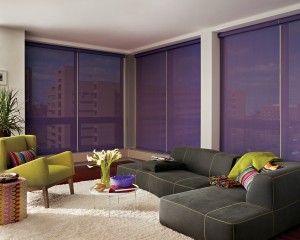
Fabric color is not merely decorative. Darker solar shade fabrics often provide a crisper view outward because they reduce reflection and visual haze. They can look sophisticated against modern architecture and perform beautifully in rooms where a view is central to the design.
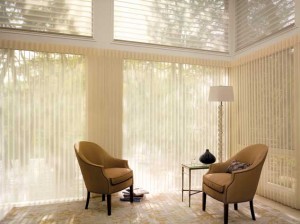
Lighter fabrics tend to create a more luminous, airy effect from inside the room. They may blend gently with pale walls and soft furnishings, but they can produce more reflected light and a slightly less defined view. Neither choice is inherently better. The best selection balances the room’s color palette with its exposure and intended use.
A professional sample review is valuable because fabric changes character throughout the day. What looks warm and subtle in a showroom can appear much brighter on a south-facing wall of glass. Reviewing samples directly at the window helps identify the right weave, color, and openness factor before fabrication begins.
Where Solar Shades Work Best
Solar shades are versatile, but they are not a one-size-fits-all treatment. They are particularly well suited to living rooms, kitchens, great rooms, home offices, and dining spaces with expansive glazing. In these areas, filtered daylight and preserved views are often more important than room-darkening capability.
They also suit commercial environments exceptionally well. Offices, medical practices, retail spaces, and hospitality settings often need controlled daylight without the heaviness of traditional blinds. A clean roller shade profile supports a polished architectural look and can be specified across large banks of windows for visual consistency.
In bedrooms, solar shades can still be useful as part of a layered design, but they are rarely the only treatment if darkness is a priority. For a nursery, guest room, or media room, room-darkening or blackout roller shades may be the more functional primary choice. The distinction matters: solar fabric filters the sun; blackout fabric is designed to block it.
Solar Shades Compared With Other Window Treatments
Solar shades differ from cellular shades, wood blinds, shutters, and drapery in both appearance and performance. Cellular shades are often chosen for insulation and can provide stronger privacy, though they do not preserve exterior views in the same way. Wood blinds and shutters offer adjustable slats and architectural presence, but their view is divided by the structure of the treatment.
Drapery brings texture, softness, and a highly custom finish. It can also provide exceptional light control when lined properly. Yet on its own, drapery may not be the most convenient response to daily glare on wide or frequently used windows. Combining solar shades with custom drapery often delivers the best of both: practical solar control and a more layered, finished design.
For minimal, contemporary interiors, solar roller shades are often a natural fit. Their hardware can be discreet, their lines are clean, and the fabric itself becomes a quiet architectural element rather than a visual distraction.
The Value of Motorized Solar Shades
Large windows, tall ceilings, and multi-window walls are ideal candidates for motorization. With systems such as PowerView® or Lutron®, solar shades can be raised, lowered, or adjusted on a schedule with a remote, wall control, app, or integrated smart-home system.
This is not simply a convenience feature. Automation can improve the consistency of solar control, particularly on windows that receive strong sun at predictable times. Shades can lower in the afternoon to protect furnishings and reduce glare, then raise later to restore the evening view. For hard-to-reach windows, motorization makes a treatment that might otherwise be impractical easy to use every day.
Commercial clients may also benefit from coordinated control across many shades, creating a more comfortable environment for employees and visitors while maintaining an orderly exterior appearance.
A Custom Fit Makes the Difference
Solar shades have a streamlined look, but the details behind that look deserve careful attention. Window measurements, mounting conditions, fabric direction, roll orientation, bracket placement, and side gaps all affect the finished performance. On unusually wide windows or doors, the number and placement of shade panels should be planned around sightlines, access, and the architecture.
A tailored consultation also helps resolve design questions that product photos cannot answer. Should the shade disappear into the window frame or sit above it for broader coverage? Is a fascia or cassette appropriate? Would a dual-shade system better serve the room? These choices shape both the visual result and the way the treatment functions over time.
At Blinds & Designs, this kind of planning is part of creating a window treatment that feels intentional rather than added after the fact. The right solar shade should support the architecture, work with the furnishings, and make a room more comfortable without asking it to become darker than you want it to be.
For a space filled with Bay Area light, solar shades offer a thoughtful middle path: less glare, less heat, and more protection for the things you value, while the view remains part of daily life.
Solar Shades in Hillsborough and San Francisco CA Areas
Blinds & Designs offers a full line of quality window treatments to homeowners and commercial clients throughout the San Francisco Bay Area and Marin County areas, including Burlingame, Hillsborough, Atherton, and Los Altos. With an ongoing commitment to high quality products and exceptional service, we’ve been serving our communities for over 26 years.
Stop by our showrooms in San Francisco or Belvedere-Tiburon to see a variety of motorization displays in our showroom or call 415-921-4212 Ext 101 for more information.