Hunter Douglas Duette Review for Bay Area Homes
A beautiful view is one of the great pleasures of a Bay Area home. It can also come with afternoon glare, west-facing heat, chilly mornings near the water, and a privacy challenge after sunset. This Hunter Douglas Duette® review looks at why these honeycomb shades remain a leading choice for homeowners who want a more refined answer than a basic blind or roller shade.
Duette Honeycomb Shades are not designed to disappear into the background as a commodity product. They are a custom window treatment system built around one of the most practical ideas in window coverings: a structured cellular fabric that traps air at the glass. The result is a shade that can soften a room visually while helping manage light, privacy, and temperature.
What Makes Duette Honeycomb Shades Different?
The defining feature is the honeycomb-shaped cell construction. When viewed from the side, the fabric forms pockets of air between the room and the window. Those pockets create an insulating layer that conventional blinds and many single-layer shades do not provide.
That difference is especially meaningful on large expanses of glass, older windows, bedrooms that feel cold overnight, and sun-exposed rooms that become uncomfortable in the afternoon. A window treatment cannot replace efficient glazing or solve every heating and cooling issue, but Duette shades can make a noticeable contribution to comfort when properly specified.
Hunter Douglas offers Duette fabrics in a broad range of opacities, colors, cell sizes, and operating systems. This is where a custom consultation matters. The right selection for a bright San Francisco living room may be very different from the right selection for a Tiburon bedroom with water views or a Marin home with dramatic floor-to-ceiling windows.
Hunter Douglas Duette Review: Performance Where It Counts
Many clients choose Duette for its balance of performance and appearance. It has a clean profile and goes beyond filtering views, supporting how a room is used.
Insulation and Energy Comfort
Duette shades are well regarded for thermal performance because of their cellular design. Single-cell fabrics offer meaningful insulation, while certain double-cell and Architella® configurations add additional layers of air pockets for enhanced performance. These options are worth considering for rooms with persistent heat gain or cold glass.
The trade-off is scale and budget. More insulating constructions can have a fuller profile and generally cost more than simpler fabrics. They are often most valuable when the window’s condition, its direction, and the room’s daily use justify the upgrade. For a decorative guest room with modest sun exposure, a simpler Duette fabric may be the more sensible choice.
Light Control Without Sacrificing the Room
Duette offers sheer, light-filtering, room-darkening, and blackout-oriented options. That range gives homeowners more design control than the word “shade” might suggest. A light-filtering fabric can temper harsh daylight in a kitchen or family room while keeping the space open and welcoming. Room-darkening fabrics suit bedrooms, media rooms, and nurseries where controlling outside light is a priority.
For the most demanding sleep environments, systems that combine two fabrics can be particularly useful. A light-filtering shade provides comfortable daytime light, while a darker fabric can be used when you need greater privacy or darkness. It is a more versatile approach than committing an entire room to blackout fabric.
No interior shade creates complete darkness in every situation. Light can still appear around the edges, particularly on unusually shaped windows or when exterior light sources are strong. Careful measuring, professional installation, and realistic expectations are essential.
Privacy That Still Feels Elegant
Privacy is often the deciding factor for city homes, homes near neighboring properties, and street-facing rooms. Duette fabrics can provide excellent daytime and nighttime privacy depending on the chosen opacity. The key is to select with the lighting conditions in mind.
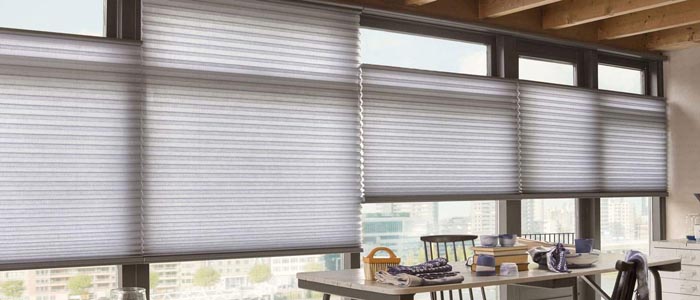
A sheer or very open light-filtering fabric may look private during the day, but interior lights can make silhouettes more visible after dark. Bedrooms and bathrooms usually call for a more opaque material. In living spaces, top-down/bottom-up operation can be a particularly elegant solution: lower the shade from the top to preserve sky, treetop, or bay views while shielding the lower portion of the window.
Design Options Are a Real Advantage
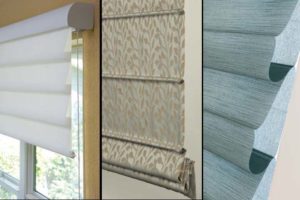
Premium window treatments should complement architecture rather than compete with it. Duette shades are available in a wide palette of neutrals, textures, and fabric styles, allowing them to feel crisp and contemporary, soft and understated, or quietly architectural.
The cellular construction also eliminates the slat lines associated with blinds. When raised, the shade stacks neatly; when lowered, it presents a continuous fabric surface. This makes Duette especially appealing for modern interiors, rooms with substantial glazing, and projects where the windows need visual order without heavy drapery.
That said, Duette is not the automatic best choice for every aesthetic. If the goal is a dramatic layered treatment with pattern, fullness, and a strong fabric presence, custom drapery or Roman shades may better serve the design. Likewise, homeowners who want the view to remain almost entirely unobstructed when shades are raised should compare stack heights and operating options across products before deciding.
Manual Operation or PowerView® Automation?
Duette shades work well with several control choices, from streamlined manual systems to PowerView Automation. The right decision usually comes down to window height, quantity, daily routine, and how much convenience matters in the finished space.
Cordless manual operation works well for a few accessible windows. For tall windows, clerestories, multi-window walls, and bedrooms with daily privacy needs, motorization enhances the experience. Shades can be grouped, scheduled, and adjusted to manage daylight. Automation is not only about novelty. In a west-facing room, programmed shade positions can help reduce harsh late-day sun. In a primary bedroom, scheduled operation can support privacy at night and a gentler morning routine. For commercial spaces, it can bring a more consistent appearance across many windows while reducing reliance on manual adjustments.
The consideration is investment and planning. Motorized shades require thoughtful specification early in a project, particularly for power access, control placement, and integration with a larger smart-home system. A knowledgeable window treatment professional can coordinate these details with designers, electricians, and builders before finishes are complete.
Where Duette Is Most Worth the Investment
Duette shines when a window has more than one job to do. It is an excellent fit for bedrooms that need darkness and insulation, family rooms with strong sun exposure, glass-heavy architecture, home offices where glare affects screens, and spaces where privacy must coexist with a view.
It is also a strong option for homeowners who prefer a tailored, low-profile treatment over heavier fabric panels. The combination of custom sizing, quality fabrics, child-safe cordless options, and advanced operation makes it feel considered rather than temporary.
For commercial projects, the same strengths apply to offices, conference rooms, hospitality spaces, and common areas where daylight control and a clean visual presentation matter. The right fabric depends on the desired brightness, the amount of solar exposure, and whether occupants need to see out during the day.
Potential Drawbacks to Consider
The first is price. Hunter Douglas Duette shades are a premium, custom-made product, and the final investment varies with window size, fabric, operating system, specialty shapes, and installation requirements. They are not the right comparison for off-the-shelf cellular shades, because the design support, finish quality, custom fit, and available systems are part of the value.
The second is fabric selection. Honeycomb shades have a soft architectural look, but they do not provide the texture, depth, or theatrical presence of drapery. Choosing a fabric solely from a small sample can also be misleading, since color and opacity change across a full window in natural light.
Finally, cellular shades require sensible care. Regular light dusting or vacuuming with a gentle attachment is usually appropriate. Kitchens, areas near fireplaces, or rooms with heavy airborne residue may require additional consideration, especially when selecting a light fabric.
The Value of Professional Specification
The product performs best when the decision is based on more than color. Window orientation, glass type, privacy needs, room use, trim depth, mounting conditions, and the desired stack height all influence the recommendation. Measuring is equally critical, particularly on older Bay Area homes where windows are rarely as uniform as they appear.
At Blinds & Designs, the process is designed to bring those details together: fabric samples in the actual room, informed guidance on operating systems, precise measurements, and polished installation. That level of service helps ensure the finished shade looks intentional and works reliably day after day.
The most useful next step is not simply choosing a Duette fabric online. Stand in the room at the time of day that causes the most discomfort, consider what you want to preserve – view, daylight, privacy, or warmth – and let those priorities shape the treatment. That is where a well-specified Duette shade earns its place in a home.
Hunter Douglas Duette Honeycomb Shades in Los Altos and San Francisco CA Areas
Blinds & Designs offers a full line of quality window treatments to homeowners and commercial clients throughout the San Francisco Bay Area and Marin County areas, including Burlingame, Hillsborough, Atherton, and Los Altos. With an ongoing commitment to high quality products and exceptional service, we’ve been serving our communities for over 26 years.
Stop by our showrooms in San Francisco or Belvedere-Tiburon to see a variety of motorization displays in our showroom or call 415-921-4212 Ext 101 for more information.