Hunter Douglas Blinds Review
A Hunter Douglas blinds review asks if these window treatments look and perform well long after renovation. For many Bay Area homes, the answer is yes, if the product suits the room, exposure, and lifestyle. Hunter Douglas offers a premium, custom solution with benefits in design, light, insulation, and automation. The trade-off is equally clear. These products require a larger investment than off-the-shelf blinds, and the number of styles, fabrics, controls, and options can feel overwhelming without expert guidance. The strongest results come from treating window coverings as part of the architecture and interior design, not as a final decorative purchase.
Window Treatments for Every Room in Your Home
Hunter Douglas has a wide selection of custom blinds, shades, shutters, and sheers, each suited to different needs. A south-facing San Francisco living room might need filtered daylight; a Marin bedroom may require darkening; a Tiburon home with large glass might need insulation and motorized control. Different problems demand different solutions.
The brand’s materials and construction reflect its premium status, with fabrics feeling high-quality and color palettes suitable for both classic and modern interiors. Many collections feature thoughtful details like light-blocking side channels, specialty vane designs, or insulating cellular construction. Custom sizing ensures proper proportions, mounting depth, and alignment, especially on large windows and rooms with detailed millwork.
Hunter Douglas allows designers to coordinate function and finish. Clients can select woven shades for softness, Roman shades for pattern, or wood blinds for structure, depending on the desired effect. Coordinated products create a more polished look than repeated, purposeless choices.
Light Control is the Main Advantage
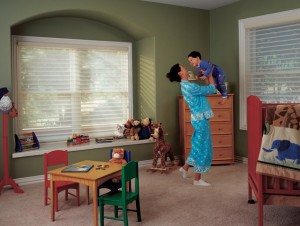
Many homeowners prioritize privacy but realize they use daylight control daily. Hunter Douglas offers strong options. Sheer shades diffuse harsh sun while keeping an open feel. Adjustable vanes direct light up or down. Cellular shades offer a softer glow, while room-darkening options suit bedrooms, media rooms, and nurseries.
Distinguish between room darkening and true blackout. An opaque shade reduces light, but gaps may let light in unless properly installed. For the darkest rooms, consider side channels, outside mount, drapery, or layered treatments. An in-home consultation can help determine the best solution.
Energy Efficiency Can Be Significant
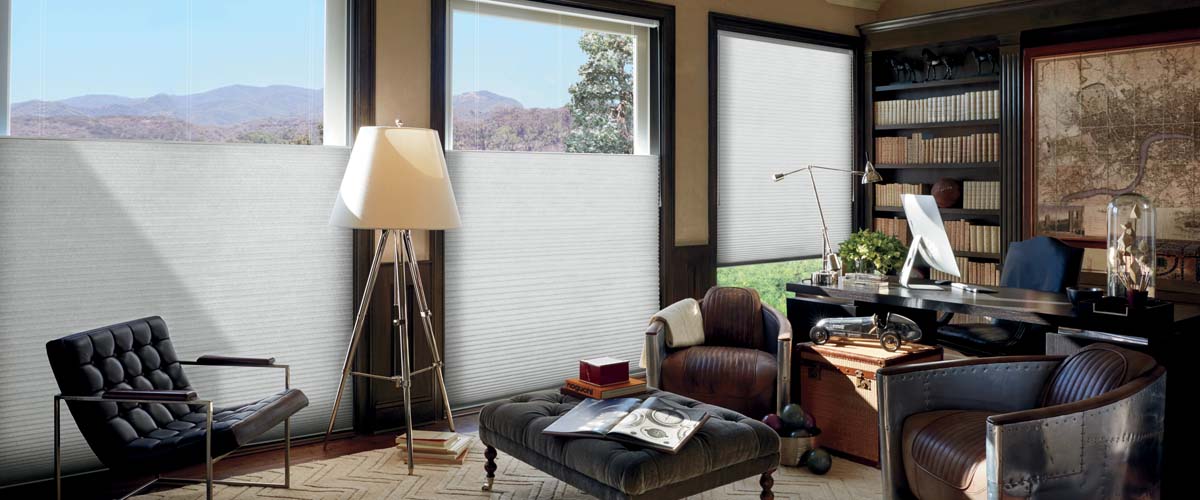
The Bay Area’s climate is moderate, but glass still creates comfort challenges. Morning glare, late-afternoon heat, chilly windows, and uneven temperatures are common in homes with large exposures. Hunter Douglas Duette® Cellular Shades are often a standout option because their honeycomb construction traps air at the window. They can help reduce heat gain and loss while maintaining a refined, minimal appearance.
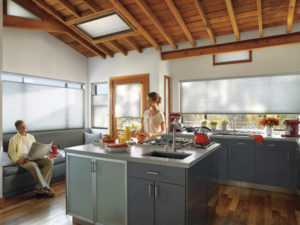
Energy efficiency extends beyond cellular shades. Roller shades, woven woods, shutters, and drapery also improve solar control, depending on glass type, window orientation, color, openness, and whether the treatment remains closed during peak sun. A shade that stays raised all day won’t match the comfort of one that responds to the home’s actual exposure.
Design Options That Feel Custom, Not Commodity
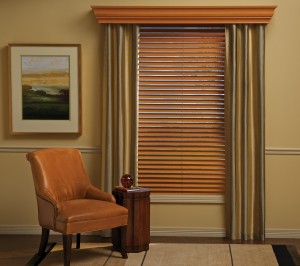
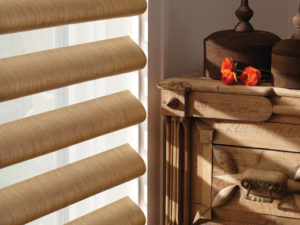
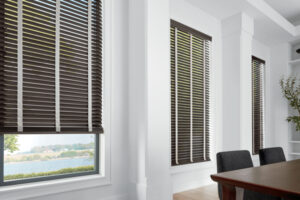
Hunter Douglas offers a collection for nearly every design direction, but the product family should align with the room’s priorities. Silhouette® and Pirouette® Sheer Shades are often chosen when filtered light and a soft architectural look are central to the design. Vignette® Roman Shades offer the warmth and tailoring many clients want without the maintenance demands of traditional fabric folds. Parkland® Wood Blinds and Heritance® Hardwood Shutters bring dimension and enduring character to more traditional, transitional, or coastal-inspired spaces.
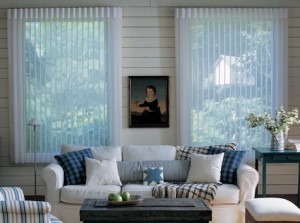
For large sliding doors and wide expanses of glass, vertical solutions deserve careful consideration. Luminette privacy sheers and panel-track-style options can offer coverage without making the room feel closed in. In contemporary homes, roller shades may be the cleanest answer, particularly when paired with custom drapery for softness and nighttime privacy.
Having a wide selection is definitely a bonus, but it’s important to choose carefully to avoid costly mistakes. For instance, a fabric that looks stunning in a showroom might seem too see-through when placed in a sunny bedroom. Dark colors can be eye-catching, but they tend to absorb more heat, which might not be ideal. Natural woven materials add lovely texture and character, but their slight variations and tiny gaps might not offer the privacy you’re looking for. The best choice strikes a happy balance—offering a beautiful view from the inside, a pleasing appearance from outside, and adapting beautifully to the shifting light throughout the day.
Is PowerView® Automation Worth It?
PowerView Automation makes Hunter Douglas especially compelling for premium homes, allowing motorized shades to be raised, lowered, tilted, or scheduled. This is practical for hard-to-reach windows, tall stairwells, glass walls, and provides daily convenience in bedrooms, living areas, and offices where glare and privacy vary.
Automation is more than a luxury feature when it is planned well. A scheduled routine can lower the shades before the direct afternoon sun reaches the artwork and furnishings, then raise them when the glare has passed. Grouping treatments by room or activity avoids the annoyance of operating numerous individual shades. For households with children or pets, cordless and motorized options can also simplify window areas by reducing accessible cords.
The limitation is that motorization adds cost and requires decisions early in the process. Rechargeable battery options are convenient for many windows, while hardwired power can be preferable for new construction, major remodels, or a large number of automated treatments. Integration with a broader smart-home system should be reviewed before installation, particularly when a project includes lighting control, security, or whole-home automation.
Where the Investment Makes the Most Sense
Hunter Douglas excels in rooms where performance and finish are visible, like bedrooms, sunlit living rooms, kitchens with hard-to-reach windows, and large open spaces where window treatments impact the entire interior. It’s also ideal for commercial settings needing glare control, polished look, and consistent operation across many windows. windows.
For a secondary room with a simple, standard-size window and modest light-control needs, a less expensive option may be perfectly reasonable. Premium products are not automatically the right answer for every opening. The value comes from using the right level of product where it will be seen, used, and appreciated most.
Installation is another part of the value calculation. Custom window treatments can be technically demanding, particularly in older San Francisco homes with uneven openings, deep trim, bay windows, or limited mounting depth. Accurate measuring, thoughtful product specification, and precise installation protect the investment. They also prevent the common disappointments of light gaps, interference with handles, crooked alignment, or shades that cannot clear a window fully.
Final Perspective on Hunter Douglas
Hunter Douglas earns its reputation through choice, engineering, and a design language that works in both traditional and contemporary interiors. Its strongest features are not always obvious in a product photo. They are felt when daylight is comfortable, privacy is effortless, a large shade moves quietly at the touch of a button, and the window treatment still looks intentional years later.
For homeowners and design professionals weighing the cost, begin with the room that creates the most frustration or offers the greatest design opportunity. A carefully specified treatment there can set the standard for the rest of the home. Blinds & Designs can help translate that goal into a custom solution that respects the architecture, the view, and the way the space is used.
Hunter Douglas Window Treatments in Marin County and San Francisco CA Areas
Blinds & Designs offers a full line of quality window treatments to homeowners and commercial clients throughout the San Francisco Bay Area and Marin County areas, including Burlingame, Hillsborough, Atherton, and Los Altos. With an ongoing commitment to high quality products and exceptional service, we’ve been serving our communities for over 26 years.
Stop by our showrooms in San Francisco or Belvedere-Tiburon to see a variety of motorization displays in our showroom or call 415-921-4212 Ext 101 for more information.