How to Choose the Best Shades for Sliding Doors
A sliding glass door is often the largest, brightest opening and one of the hardest to treat well. The best shades need to look good, cover a wide span, move easily, manage glare and heat, and provide privacy without hindering access.
For homes in San Francisco, Marin, and the Bay Area, the right choice depends on the view. Waterfront outlooks, urban terraces, or garden-facing patios may require different levels of solar control, privacy, and softness. The best solution is usually a custom treatment, tailored to room use and door operation.
Where to Start
Start with the door itself. A standard two-panel patio door needs a different treatment than a multi-panel stacking system, a corner opening, or a large lift-and-slide door. The shade should stack away from the active opening whenever possible, leaving the path outside clear and preserving as much glass as the room allows.
Next, consider the priorities that matter most. For a family room, glare reduction and easy operation may lead the conversation. In a bedroom, room darkening and nighttime privacy can take precedence. In a dining room or contemporary great room, the material’s visual texture may matter as much as its performance.
Orientation also matters. West-facing doors can bring intense afternoon heat, while south-facing glass may benefit from a fabric selected for solar control. A carefully chosen opacity can reduce harsh sun and protect floors, furnishings, and artwork without closing off the view.
Vertical Cellular Shades for Insulation and Softness
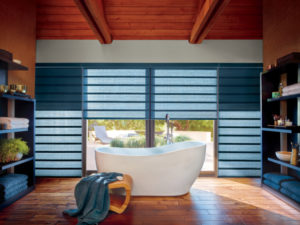
Vertical cellular shades are among the most practical options for large sliding doors. Their honeycomb construction creates insulating air pockets that help moderate heat gain near expansive glass. They travel horizontally on a track and typically stack neatly to one or both sides, making them especially well-suited to patio doors and wide glass walls.
The design has a softer, more architectural appearance than traditional vertical blinds. It works beautifully in bedrooms, living rooms, and family spaces where clients want insulation and privacy but prefer a clean, fabric-forward look. Available opacity levels can range from light filtering to room darkening, so the treatment can be tailored to the room’s needs.
The trade-off is that cellular fabrics have a more substantial presence than a sheer roller fabric. If your main goal is an almost invisible view when the treatment is open, a streamlined roller or panel-track system may be the better fit.
Roller Shades for a Minimal, Contemporary Look
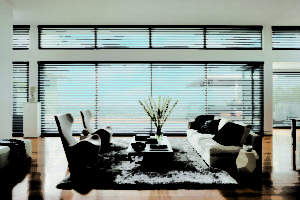
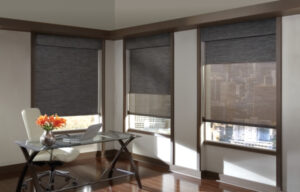
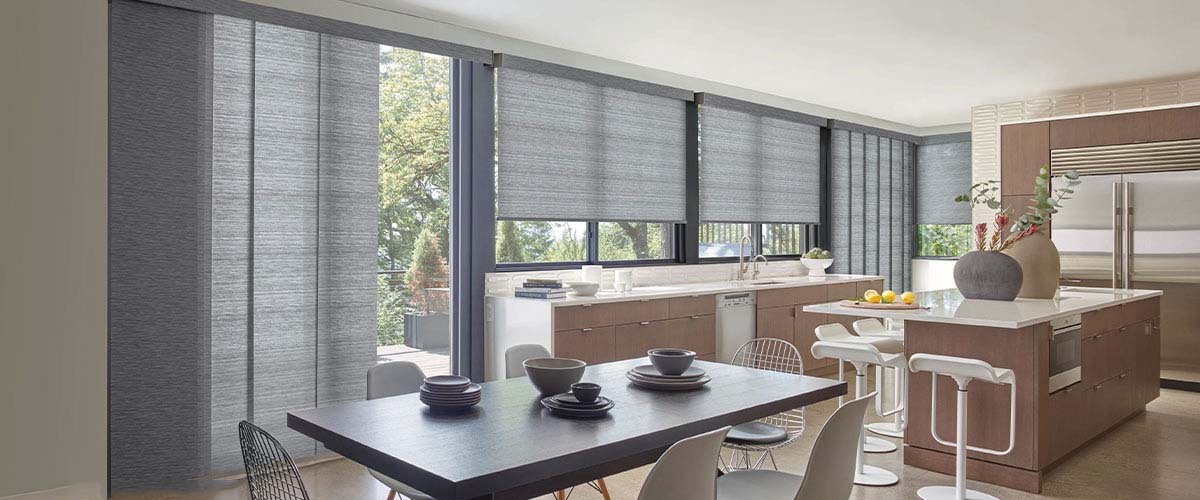
Roller shades are a natural choice for modern Bay Area interiors, particularly when the goal is crisp lines and highly controlled light. On sliding doors, they can be configured as multiple individually operated shades or as a coordinated system across the opening. Solar screen fabrics are particularly effective when a view is worth preserving, but direct sun needs to be softened.
Fabric openness matters. A more open weave admits more daylight and offers a clearer outward view during the day, while a tighter weave provides greater privacy and glare control. At night, however, many solar fabrics offer limited privacy when interior lights are on. A secondary drapery layer, a room-darkening liner, or a different opacity may be appropriate for exposed locations.
Roller shades are especially compelling when paired with motorization. On a long bank of doors, automation lets multiple shades move together with a wall control, remote, app, or programmed schedule. This adds everyday convenience and helps homeowners consistently manage sun exposure throughout the day.
Panel Track Shades for Wide Openings
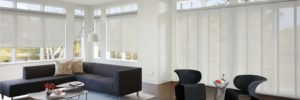
Panel track shades use broad fabric panels that glide horizontally along a track. They are designed for scale, making them a refined solution for extra-wide patio doors, multi-panel sliders, and contemporary homes with large expanses of glass. When open, the panels stack in a tailored, linear arrangement rather than folding.
This format offers exceptional design flexibility. Panels can be made in screen fabrics, textured weaves, decorative textiles, or room-darkening materials. The result can be restrained and minimal or richly layered, depending on the space. In open-plan homes, panel tracks often feel intentional because their scale relates well to wide glass walls and generous ceiling heights.
The key is precise planning. Panel widths, stacking location, hardware finish, and track placement all affect the result. A treatment that is technically correct but stacks over the most-used side of the door can quickly become frustrating. Professional measuring and product specifications are particularly valuable here.
Woven Wood Shades for Natural Texture
Woven Wood Shades bring warmth, depth, and an artisan quality that many synthetic materials cannot replicate. They suit transitional, coastal, organic modern, and traditional interiors, especially when a sliding door needs to feel integrated with wood furniture, natural stone, or layered textiles.
For sliding doors, woven materials are often used in a panel-track configuration or combined with drapery. The woven shade supplies texture and filtered light, while custom drapery provides added privacy, insulation, and a softer finish at the edges of the glass. This pairing is particularly effective in formal living spaces and primary suites.
Because natural woven materials vary in color and weave, they aren’t the right answer for every project. They can also allow small points of light through the weave, even with a liner. That character is part of their appeal, but clients seeking complete room darkening should consider a lined drapery, a cellular shade, or a dedicated blackout system instead.
Sheer Vertical Shades for Light-Filled Rooms
Sheer vertical shades offer a sophisticated middle ground between sheer curtains and vertical blinds. Soft fabric vanes rotate to direct light and create privacy, while the sheer backing maintains a bright, airy feeling. They are an elegant choice for doors opening to patios, decks, or landscaped gardens where daylight remains central to the room.
These shades are especially appealing in dining rooms and living areas because they soften the hard lines of glass without adding visual weight. Adjust the vanes for filtered light during the day, then close them for more privacy in the evening. Their vertical orientation also complements the movement of a sliding door.
They are less suited to spaces that demand blackout darkness or maximum insulation. Still, for a room where atmosphere matters as much as coverage, sheer vertical shades can create a remarkably polished effect.
Motorization Makes Large Doors Easier to Live With
A beautiful shade is only as good as its use. Large sliding-door treatments can be inconvenient to adjust manually, especially when the glass is tall, the opening is wide, or the shades are behind furniture. Motorized systems from trusted brands such as Hunter Douglas and Lutron make it simple to manage a single door or an entire wall of glass.
For homeowners, this can mean lowering shades before afternoon sun reaches the room, opening them in the morning, or closing them at night without walking across the space. For designers and commercial clients, motorization supports a cleaner finished appearance by reducing the need for visible cords and manual controls.
It is worth discussing power early in the project. Some systems use rechargeable battery power, while hardwired options may be ideal during a renovation or new build. The best approach depends on access, scale, desired controls, and long-term service expectations.
Details That Make the Difference
The most successful sliding-door shades are planned as part of the room, not selected as an afterthought. Mounting depth, trim, door handles, ceiling height, and furniture placement all influence what will operate well. In some homes, an outside mount is necessary to achieve full coverage. In others, a recessed installation creates the cleanest architectural line.
Layering can also solve competing needs. A solar shade may protect a view during the day, while side drapery panels add softness and nighttime privacy. A vertical cellular shade may improve comfort near a cold or sun-exposed door, while a valance or fascia gives the hardware a more finished look.
At Blinds & Designs, we find that the right answer often becomes clear once the door is measured, the light is observed, and the surrounding materials are considered. A sliding door should remain easy to use and beautiful to look through. Choose a treatment that supports both, and the room will feel more comfortable every day.
Vertical Blinds and Shades for Sliding Doors in Atherton and San Francisco CA Areas
Blinds & Designs offers a full line of quality window treatments to homeowners and commercial clients throughout the San Francisco Bay Area and Marin County areas, including Burlingame, Hillsborough, Atherton, and Los Altos. With an ongoing commitment to high quality products and exceptional service, we’ve been serving our communities for over 26 years.
Stop by our showrooms in San Francisco or Belvedere-Tiburon to see a variety of motorization displays in our showroom or call 415-921-4212 Ext 101 for more information.